Skip to main
University-wide Navigation

The MOBILE cluster focuses on field-deployable instrumentation, giving users access to a new generation of portable devices for non‐invasive imaging and analysis of friable or immovable artifacts, archaeological sites, and historical monuments. It enables the implementation of complex, multi‐technique diagnostic projects, permitting the most effective in situ investigations of subjects that cannot be delivered to EduceLab for analysis. 

Two unique MOBILE labs serve different on-site needs of the user communities: 

  • MOBILE1, a 4x4 vehicle outfit with an array of modular remote and in-situ sensors employing UAS and/or ground platforms for detailed multi-modal surveys of larger contextual areas for heritage sites;
  • MOBILE2, a road vehicle outfit with an experimental platform for imaging and analyzing natural and cultural heritage artifacts and collections. Primary capabilities include a shielded portable micro-CT system, a high-resolution multispectral document camera, an integrated data center, a rapidly deployable wireless network, a point-to-point network, and additional portable equipment for in-situ specimen characterization, such as XRF and 3D profilometry.

Both EduceLab configurations can used as a movable station on site or as a fixed base for intensive observation periods (IOP). 
AVAILABLE INSTRUMENTATION

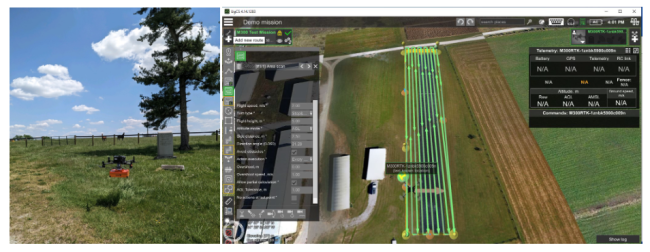
EduceLab Unmanned Aviation Vehicles

The custom-made UAVs contain cameras and sensors that allow for surveys across heritage sites and their surrounding environments. EduceaLab UVAs can be equipped with a multispectral camera, LIDAR system, and radar instruments.

EduceLab Unmanned Aviation Vehicles

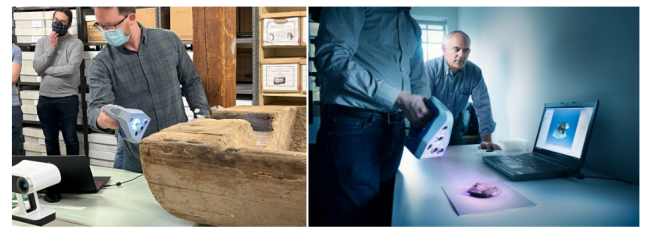
Artec SpaceSpider 3D Scanner

The Artec SpaceSpider is the tried and true 3D scanner for high quality digitization in a museum or collections setting. This scanner boasts a 3D point accuracy of up to 0.05mm, making it ideal for scanning even small objects needed for digitization. Both the Artec SpaceSpider and Artec Leo utilize the newest release of ArtecStudio 17 for post-processing.

More details on the Artec SpaceSpider can be found on the Artec website.

Artec SpaceSpider 3D Scanner

Artec Leo 3D Scanner

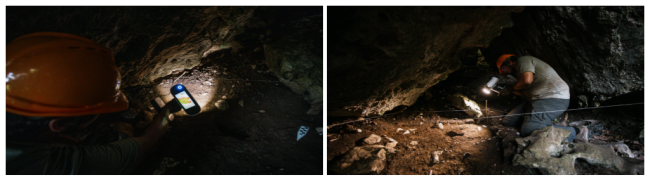
The Artec Leo is the only professional 3D scanner on the market with wireless scanning capabilities. The built-in display and graphics card enables the user to complete scans on the scanner without the immediate need for an external computer, making this scanner ideal for 3D scanning on-the-go and directly in the field. The Artec Leo scans at a resolution of 0.1mm, making this scanner perfectly suited for creating high quality 3D models of large artifacts in situ or in museum collections, or even for digitizing complete field units without the need to worry about overloading computer workstations in post-processing. Both the Artec SpaceSpider and Artec Leo utilize the newest release of ArtecStudio 17 for post-processing.

More details on the Artec Leo can be found on the Artec website.

Artec Leo 3D Scanner

Bruker Tracer 5 Portable X-Ray Fluorescence Spectrometer

The Tracer 5 pXRF spectrometer can measure up to 48 elements, offering a wide range of matrix matched calibrations at <140 eV Mn ka energy resolution. Measurements can be made in air, vacuum, or helium atmosphere. The  small distance between the sample and detector allow for sensitive detection, with a measurement spot size of 3mm or 8 mm. The highly portable design make it indispensable for a range of applications, including element analysis of artifacts in museum collections and directly in the field.

More details on the Bruker Tracer 5 pXRF can be found on the Bruker website.

Bruker Tracer 5 Portable X-Ray Fluorescence Spectrometer

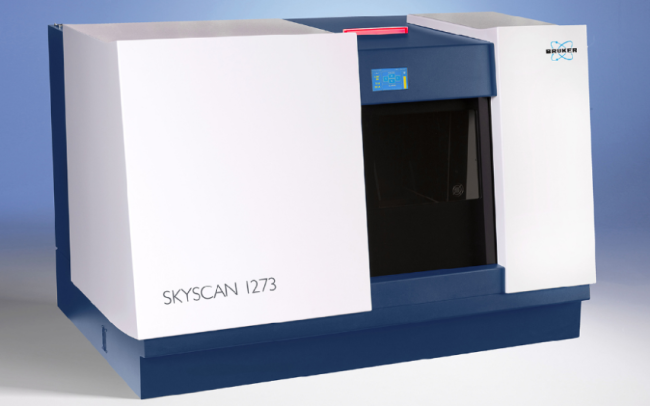
Bruker Skyscan 1273 Desktop Micro-CT Scanner

The SKYSCAN 1273 is a high energy micro-CT scanner for large and dense objects. It includes a 130 kV microfocus X-ray source, a large format (6Mp) active pixel flat panel detector, and a precision object manipulator for large (up to 300 mm in diameter, 500 mm in length) and heavy (up to 20 kg) objects with an integrated micro-positioning stage. The scanning volume up to 250 mm in diameter and 250 mm long allows investigating wide range of objects.   

The full range of Bruker’s 3D.SUITE software is supplied, including fast volumetric reconstruction, software for 2D/ 3D quantitative analysis and for surface rendering visualization, software for realistic visualization and easy creation of movies by volume rendering with possibility for virtual flight around and inside the reconstructed object's microstructure.  The SKYSCAN 1273 is supplied with GPU-accelerated reconstruction for round and helical scanning geometries by patented (licensed) exact reconstruction algorithm. 

Reconstruction results can be sent to iPad, iPhone or Android devices. Special software for mobile platforms performs volume rendering and virtual cut of objects with touch screen gesture controls. 

More details on the Bruker Skyscan 1273 can be found on the MicroPhotonics web site.

Picture of Skyscan 1273